
What are Medical Flights and Why are They Vital?
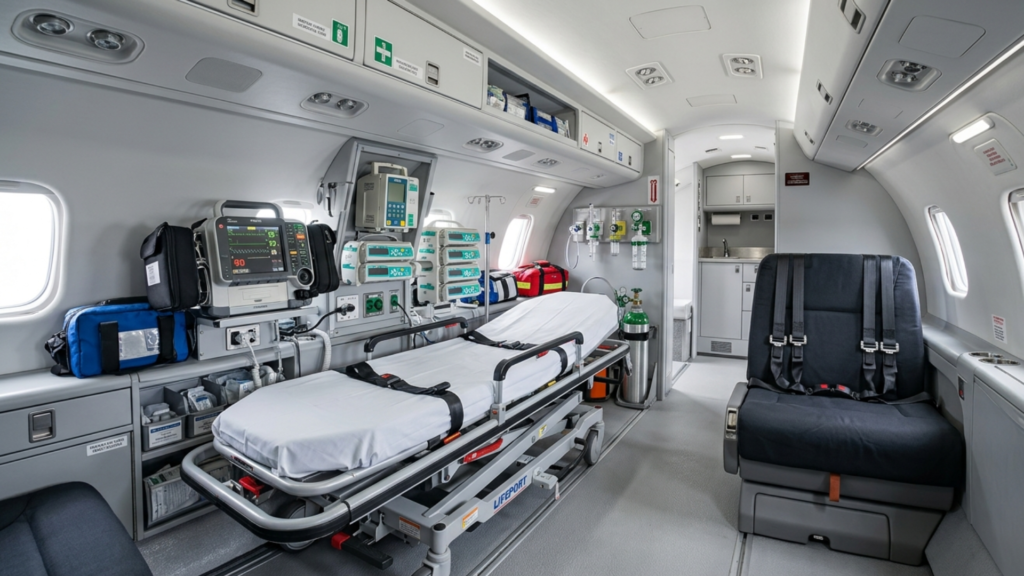
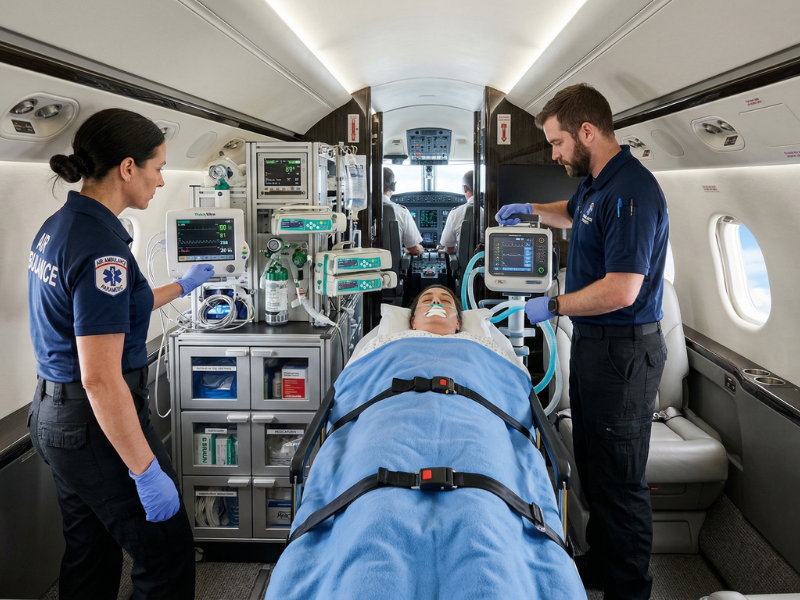
Medical flights are specialized air transport services that utilize aircraft configured as mobile Intensive Care Units (ICUs) to move critically ill or injured patients. As of 2026, the global air ambulance market has surpassed a $11.5 billion valuation, driven by an aging population and the expansion of specialized centers of excellence across Europe and North America.
These services provide a “bedside-to-bedside” solution, ensuring that medical care is never interrupted. By utilizing aviation, patients can bypass the logistical limitations of ground transport, reducing transit times by up to 40-60% on long-distance routes.
Technical Classification of Aeromedical Aircraft
For brokers and healthcare providers, selecting the right platform is a balance between speed, cost, and runway requirements.
1. Turboprop Air Ambulances: Efficiency for Regional Access
How do they work? Turboprops use a gas turbine to drive a propeller. This configuration allows them to operate on shorter, unpaved, or regional runways (less than 3,200 ft) where larger jets cannot land.
- Leading Entities: Beechcraft King Air 200/350, Piper Cheyenne, and the Pilatus PC-12.
- Strategic Use: Ideal for regional transfers and rural-to-urban missions. They offer a significant cost advantage while maintaining high levels of clinical equipment.
2. Medical Private Jets: High-Speed Intercontinental Care
What is a medical jet? It is a high-performance aircraft capable of cruising at altitudes above 40,000 feet, providing a pressurized, stable environment for long-haul patient repatriation.
- Leading Entities: Learjet 45/75, Cessna Citation Bravo, Bombardier Challenger 605, and Gulfstream G650 for ultra-long-range missions.
- Operational Advantage: These jets are essential for international medical repatriation. In 2026, many of these aircraft are equipped with low-latency satellite connectivity (Starlink), allowing real-time data streaming between the flight crew and the receiving hospital’s specialists.
3. HEMS (Helicopter Emergency Medical Services)
When is a helicopter necessary? Helicopters provide “point-to-point” transfer capability, landing directly at hospital helipads or accident scenes, completely bypassing ground traffic.
- Leading Entities: Eurocopter EC145, Bell 412, and AgustaWestland AW109.
- Primary Function: Primarily used for trauma scene response and short-distance hospital transfers (within a 300-mile radius).



2026 Performance Comparison: Aeromedical Assets
Aircraft Type | Avg. Cruise Speed | Max Range | Runway Requirement | Primary Use Case |
Turboprop | 280 – 330 kt | 1,200 – 1,600 nm | Short / Unpaved | Regional / Budget-friendly |
Medical Jet | 430 – 510 kt | 2,000 – 6,500 nm | Mainstream Airports | Intercontinental / Critical |
HEMS (Helo) | 130 – 160 kt | 300 – 450 nm | Vertical (Helipad) | Emergency / Urban |
Specialized Aeromedical Service Modalities
Medical Escort (Commercial Flight Support)
This is a non-emergency service where a medical professional accompanies a stable patient on a commercial airline. It is the most cost-effective solution (saving up to 70% compared to private charters) and is frequently used for post-surgery travel or elderly relocation.
MEDEVAC (Medical Evacuation)
MEDEVAC refers to the rapid evacuation of wounded or critically ill persons from a remote location or an accident scene to a specialized medical facility. It often involves high-priority clearance from Air Traffic Control (ATC).
International Patient Repatriation
This service coordinates the return of travelers who have fallen ill or been injured abroad. It involves complex logistics including IATA health regulations, embassy coordination, and multi-lingual medical teams.
Organ and Surgical Team Transport
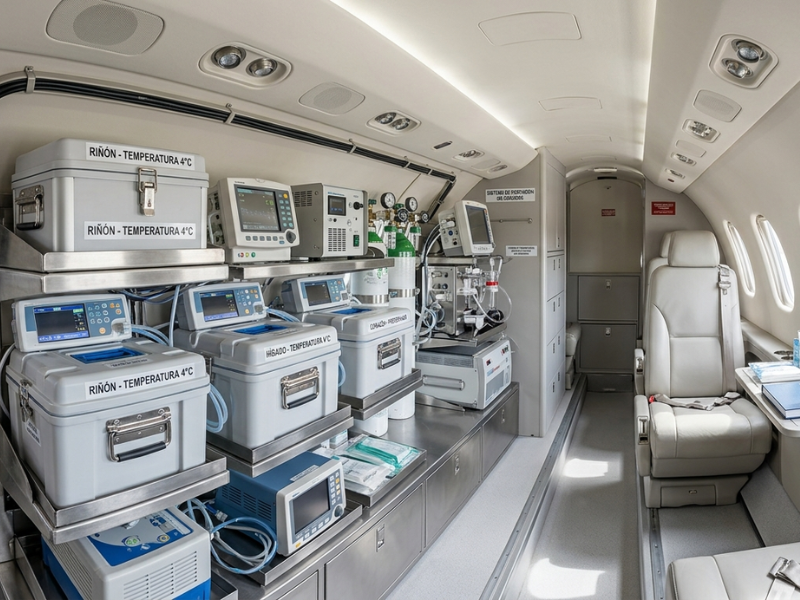
Why is speed critical? Human organs have a very narrow viability window (e.g., a heart must be transplanted within 4–6 hours). In 2026, the use of dedicated “Organ Recovery Jets” ensures that surgical teams and organs reach their destination with zero delays.
Neonatal and Pediatric Transport
These flights utilize specialized neonatal incubators, nitric oxide therapy, and pediatric ventilators. The crew typically includes a neonatal intensive care nurse and a neonatologist, functioning as a flying NICU.
2026 Industry Trends and Innovations
- Sustainable Aviation Fuel (SAF): European brokers are increasingly prioritizing operators using SAF to meet ESG (Environmental, Social, and Governance) targets in healthcare logistics.
- AI-Driven Flight Dispatch: AI algorithms now predict weather disruptions and airport congestion 12 hours in advance, allowing for more reliable “urgent-launch” missions.
- Advanced Telemedicine: Real-time AR (Augmented Reality) allows onboard clinicians to consult with world-leading specialists during flight, ensuring the highest level of care at 40,000 feet.

The Gold Standard in Patient Logistics
Air medical services in 2026 represent the pinnacle of clinical and aeronautical synergy. Whether it is a Learjet performing a trans-Atlantic repatriation or a King Air accessing a remote regional strip, these services are the definitive link in the global chain of survival.
Are you looking for a specific aeromedical solution for a European or International transfer? Contact us.